In industrial manufacturing, laboratory research, and specialized chemical processing, material handling is a critical factor that directly impacts productivity, purity, and safety. Every component in the transfer pipeline matters, and when dealing with corrosive substances, extreme temperatures, or high-purity requirements, standard glass or plastic equipment simply falls short. This is where Quartz Funnels become indispensable. Offering exceptional thermal shock resistance, superior chemical inertness, and unmatched optical and material purity, quartz is the gold standard for demanding material transfer applications. Selecting the right funnel can dramatically improve operational efficiency, minimize contamination risks, and reduce long-term equipment replacement costs.
Understanding the Unique Properties of Quartz
Before diving into the selection criteria, it is essential to understand why quartz is chosen over traditional materials like borosilicate glass, stainless steel, or various plastics. Quartz, specifically fused quartz or fused silica, possesses extraordinary physical and chemical characteristics.
Thermal Stability and Shock Resistance
One of the most remarkable properties of Quartz Funnels is their ability to withstand extreme thermal shock. Unlike standard laboratory glassware, quartz can endure rapid and drastic temperature fluctuations without cracking or deforming. This makes it ideal for processes involving molten materials, high-temperature powders, or exothermic chemical reactions where heat dissipation is rapid.
Chemical Inertness
In industries such as semiconductor manufacturing, pharmaceutical formulation, and analytical chemistry, purity is paramount. Quartz Funnels exhibit extreme resistance to acids, bases, and organic solvents. Hydrofluoric acid and hot phosphoric acid are among the very few substances that attack quartz. Because quartz does not leach impurities into the transferred materials, it ensures that sensitive chemical batches remain uncontaminated.
Key Factors to Consider When Selecting Quartz Funnels
Choosing the correct funnel requires a careful evaluation of your specific operational environment, material characteristics, and equipment compatibility. Here are the core factors you must analyze.
1. Dimensional Specifications and Geometry
The physical dimensions of the funnel dictate flow rates and compatibility with existing apparatus.
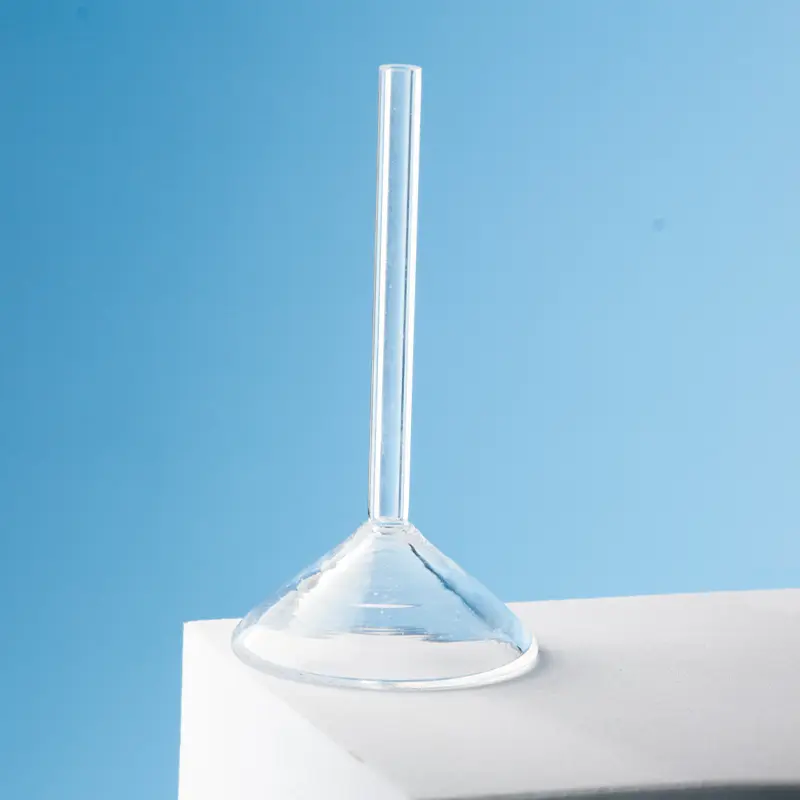
- Stem Length and Diameter: A longer stem helps direct materials precisely into a narrow opening, reducing spills and airborne dust. The stem diameter must match the receiving vessel’s neck size. A wide stem is ideal for viscous liquids or coarse powders, while a narrow stem provides controlled drip rates for delicate liquid additions.
- Bowl Angle and Diameter: The slope of the funnel cone affects how quickly powders or liquids descend toward the outlet. A steeper angle prevents powders from bridging or clinging to the sides, ensuring smooth, gravity-fed material handling.
2. Purity Grades of Quartz
Not all quartz is created equal. Depending on your application, you may need different grades of material:
- High-Purity Natural Quartz: Suitable for standard high-temperature laboratory applications and general industrial chemical handling.
- Synthetic Fused Silica: Manufactured from chemical precursors, this grade offers ultra-low trace metal impurities, making it the preferred choice for semiconductor fabrication, microelectronics, and ultra-trace analytical chemistry where parts-per-billion contamination levels matter.
3. Surface Finish and Treatment
The interior and exterior surface finish of Quartz Funnels can significantly influence performance. Fire-polished surfaces minimize microscopic crevices where powders can get trapped or residue can accumulate. For sticky or highly viscous substances, specialized surface treatments or coatings can further enhance flow efficiency and simplify cleaning procedures.
Application-Specific Requirements
Different industries place unique demands on material handling equipment. Tailoring your selection to your specific sector ensures optimal performance and safety.
Laboratory Research and Analytical Chemistry
In analytical settings, funnels are frequently used for filtration, quantitative transfer, and solid-liquid separation. Here, precision is vital. Quartz Funnels paired with appropriate filter papers or sintered quartz discs allow for seamless filtration under vacuum or gravity. Researchers must consider whether they need a plain funnel or a sintered disc funnel, which features a porous quartz frit fused into the interior to eliminate the need for loose filter paper.
Semiconductor and Electronics Manufacturing
The semiconductor industry demands ultra-clean environments to prevent microscopic defects in silicon wafers and microchips. In these settings, Quartz Funnels are utilized for handling high-purity etchants, dopants, and quartz-ware cleaning solutions. The absence of metallic contaminants in high-grade synthetic quartz prevents the degradation of semiconductor electrical properties.
Chemical Processing and Pharmaceutical Production
Large-scale synthesis and compounding require robust equipment capable of continuous operation under aggressive chemical exposure. Quartz Funnels used in these environments must often feature heavy-wall construction to withstand mechanical stress, pressure differentials, and heavy material throughput. Ground joints can also be integrated into the funnel design to create secure, airtight connections with reactors and distillation setups.
Best Practices for Maintaining Quartz Funnels
Investing in high-quality Quartz Funnels is only the first step. Proper maintenance and handling practices are essential to maximize their lifespan and maintain their performance efficiency.
Safe Handling and Cleaning Protocols
Because quartz is a form of glass, it remains susceptible to physical impact and scratching. Always use padded supports or dedicated racks when storing quartz equipment. For cleaning, avoid abrasive scouring pads that can micro-scratch the surface, creating nucleation sites for chemical residue buildup. Instead, utilize ultrasonic baths, mild laboratory detergents, or appropriate chemical cleaning agents followed by thorough deionized water rinses.
Preventing Thermal Stress Failures
Even though quartz has superior thermal shock resistance, rapid and uneven heating—such as placing a cold funnel directly into a high-temperature flame—can still cause structural failure. Gradual pre-heating and controlled cooling protocols should always be implemented in high-temperature material handling workflows.
Conclusion
Choosing the right Quartz Funnels for efficient material handling is a strategic decision that influences product purity, process speed, and operational safety. By carefully evaluating factors such as dimensional geometry, quartz purity grades, surface finishes, and industry-specific demands, you can optimize your material transfer workflows and eliminate bottlenecks. Whether you are conducting cutting-edge chemical research or managing high-volume industrial processing, integrating premium quartz equipment into your operations guarantees reliability, durability, and uncompromising quality.